
Why the choice matters
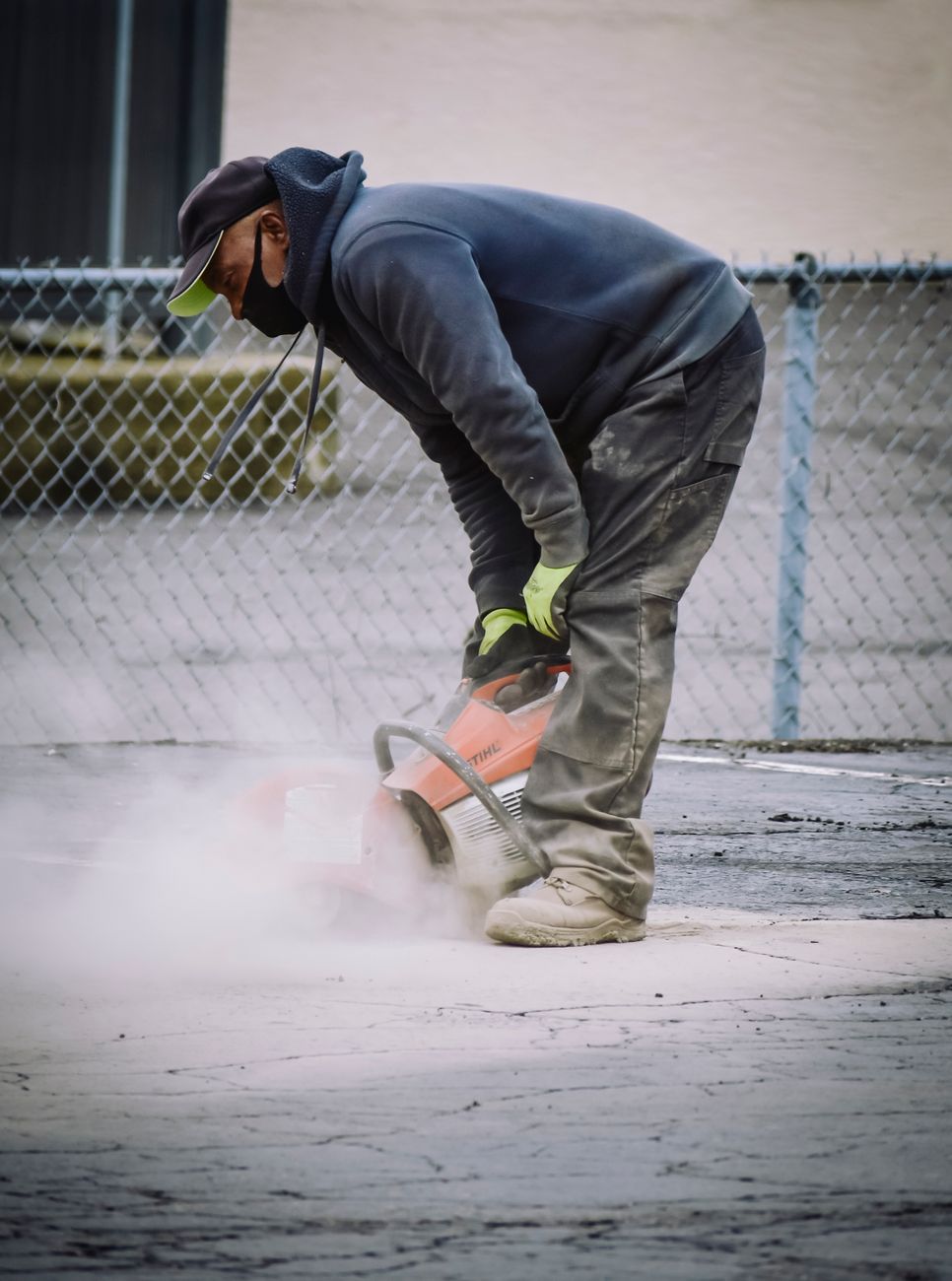
Cutting concrete, masonry, and stone can generate respirable crystalline silica dust, which OSHA identifies as a serious occupational exposure risk. The choice between wet and dry cutting affects how much dust is created, how quickly the blade heats up, and how long the blade lasts. Treat it as a safety-planning decision as well as a productivity decision.
How wet cutting works
Wet cutting uses a continuous water feed at the blade to cool the steel core and segments, suppress dust at the point of cutting, and wash away abrasive slurry. The result is typically a cleaner cut, lower dust exposure when used correctly, and longer blade life.
- Requires a wet-rated blade and a saw with a water feed.
- Generates slurry that must be managed on site.
- Best for tile, stone, and most controlled concrete cutting.
How dry cutting works
Dry cutting relies on airflow and the blade’s segment design for cooling. It is more flexible on remote or indoor sites without water access, but creates more dust and runs hotter. Dry cutting also requires the operator to cycle the blade out of the cut periodically to let it cool.
- Requires a dry-rated blade designed for higher operating temperatures.
- Generates significant airborne dust without engineering controls.
- Best when water is impractical, and only with appropriate dust controls and PPE.
Silica dust and compliance
Cutting concrete and masonry without dust controls can expose workers to respirable crystalline silica. OSHA's construction guidance says covered employers must limit worker exposure and either use the control methods in Table 1 of the construction standard or measure worker exposure and choose controls that keep exposure within required limits.
Start with OSHA's respirable crystalline silica construction guidance, then confirm the specific safety requirements that apply to your jurisdiction, employer, equipment, and project before choosing a workflow.
Choosing the safer workflow
A practical framework:
- If water is available and the saw supports it, wet cutting is often the lower-dust default.
- If wet cutting is not feasible, use a dry-rated blade with engineering dust controls and PPE.
- Never use a wet-rated blade dry — the segment joints are not designed for the heat.
For a deeper look at blade selection, see How to Choose the Right Diamond Blade for the Job.
Frequently asked questions
Can I use a wet-rated blade without water?
It is generally unsafe. Wet-rated blades are not designed for the heat generated by dry cutting and can be damaged, with risk to the operator. Use a dry-rated blade when water is unavailable.
What are the safety rules for dry concrete cutting?
Regulations vary, but OSHA's construction guidance points employers to Table 1 control methods or exposure measurement with appropriate controls. Check the specific requirements that apply to your job site.
Why does water make a diamond blade last longer?
Water reduces friction and heat on the blade core and segments, which slows wear and prevents warping or premature segment failure.
This article is for informational purposes only. Always follow manufacturer guidance, job-site safety requirements, and applicable regulations.