
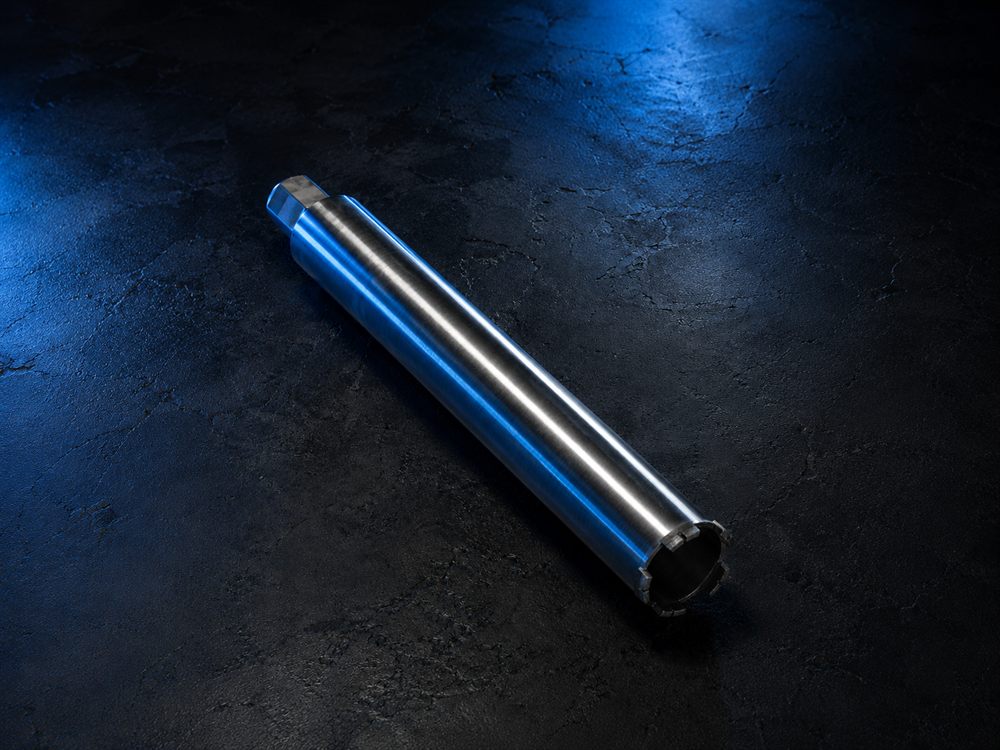
Plan the exit side and the falling core before the bit approaches breakthrough.
How to prevent a blowout when core drilling concrete begins with control of the exit before drilling starts. Confirm wall or slab thickness, locate hidden hazards, secure and align the rig, establish the approved feed and water method, barricade the opposite side, and plan how the core will be retained. As breakthrough approaches, follow the drill manufacturer's procedure and avoid forcing the bit through the remaining material.
How to prevent a blowout when core drilling concrete
Contractors use blowout to describe broken or chipped concrete around the exit face. The more serious hazard is an uncontrolled core that releases from a wall or ceiling and falls into the area beyond the hole. A clean exit matters, but the work plan must first protect people, utilities, finishes, and equipment on the exit side.
Some manufacturers’ core drill manuals require the area behind a wall or below a ceiling to be secured because material or the core may fall out at breakthrough. That precaution should be part of your planning, not a reaction after the bit is nearly through.
Plan the exit side before mounting the rig
Scroll sideways to see all columns.
| Question | Why it matters | Evidence to collect |
|---|---|---|
| What is on the far side | A core can strike people, finishes, equipment or an occupied space when it releases. | Physical inspection access control and a marked exclusion area. |
| How thick is the section | Thickness helps the operator anticipate breakthroughs and verify that the bit has enough working length. | Current drawings field measurement scanning or another approved method. |
| What is embedded | Rebar tendons and utilities can change the drilling load or make the location unacceptable. | Approved scan results drawings permits and structural or facility authorization. Use GPR if necessary. |
| How will the core be retained | Wall and overhead cores may release suddenly and can be heavy. | A job specific capture support or removal plan that keeps hands out of the hazard zone. |
| Where will water and slurry go | Uncontrolled water can damage finishes, create slip hazards and reach electrical equipment. | Containment wet vacuum drainage electrical protection and cleanup plan. |
Set up for a straight controlled breakthrough
- Approve and mark the hole after reviewing the structure concealed services and exit side. Do not rely on the entry mark alone.
- Choose a core bit with the correct diameter working length connection material rating and wet or dry instruction for the drill motor.
- Secure the stand using the method approved for the surface and orientation. Verify carriage rigidity spindle condition and bit alignment.
- Establish water delivery slurry containment electrical protection and the exclusion area before the motor starts.
- Start the hole with light controlled feed until the bit is centered then use the load guidance in the exact motor manual.
- Track depth and changes in resistance to determine when breakthrough is expected. Follow the manufacturer's feed procedure and do not force the final ring of material.
- Stop and isolate the machine before anyone approaches the exit side or handles the core. Remove the core under the approved retention plan.
What commonly damages the exit
Scroll sideways to see all columns.
| Condition | How it affects the exit | Correction to verify |
|---|---|---|
| Rig movement | The barrel shifts and breaks a larger irregular opening as it nears the far face. | Base attachment column fasteners carriage play and surface condition. |
| Excessive feed | The remaining concrete is pushed out before the segments complete cutting the ring. | Motor load indicator approved feed and operator control near breakthrough. |
| Bit deflection | A damaged mismatched or side loaded bit exits off line and can bind. | Bit condition, connection, runout diameter, gear, and drilling alignment. |
| Unknown thickness | The operator cannot anticipate the final portion of the hole or control the release. | Verify thickness depth tracking and a visible exit side when possible. |
| Unsupported core | The cut piece can fall, twist or strike the barrel as the last material separates. | A rated job specific retention and removal method. |
Drilling from both sides needs an approved layout
When both faces are accessible, some procedures finish the opening from the opposite side to protect a sensitive finish or control the exit edge. That method requires a reliable shared reference, precise alignment and access. Misregistered holes can leave a step, enlarge the opening, trap the core, or cause the two kerfs to miss.
Do not treat two sided drilling as a universal fix. The structure, access, bit length, rig mounting, scanning results, and finish requirement must support it. Use the contractor's approved procedure and the equipment manufacturer's instructions.
Do not trade safety for a cleaner exit
A cosmetic requirement does not justify an improvised support, a person standing behind the hole, or a loose rig. If the specified finish cannot be achieved within the approved setup, stop and revise the work plan. The next step may involve a different access route, a controlled two sided method, a sacrificial finish layer, or repair work after coring. The responsible project authority should decide which result is acceptable.
Water dust and electrical controls at breakthrough
OSHA identifies water applied at the cutting surface as the Table 1 control for rig mounted core drills and saws. Water flow must be sufficient to minimize visible dust. Hoses and nozzles need inspection, and slurry should be removed before it dries. Where wet methods are used, OSHA also calls for GFCI protection and watertight sealable electrical connectors.
Breakthrough can redirect water and slurry into the space behind the wall or below the slab. Containment and access control should therefore cover both sides of the opening. The exit side is part of the work zone even when the operator cannot see it from the rig.
Frequently asked questions
Will reducing pressure prevent all exit chipping
No. Controlled feed can help, but rig stability, bit condition, material quality, reinforcement and the exit support also affect the result. Follow the exact machine procedure.
Should someone catch the core by hand
No. Keep people out of the release path. Use an approved retention or capture method and isolate the machine before handling the core.
Can I core from both sides for a cleaner hole
Only when the job plan allows access and provides an accurate common reference. Poor alignment can create a stepped or oversized opening.