
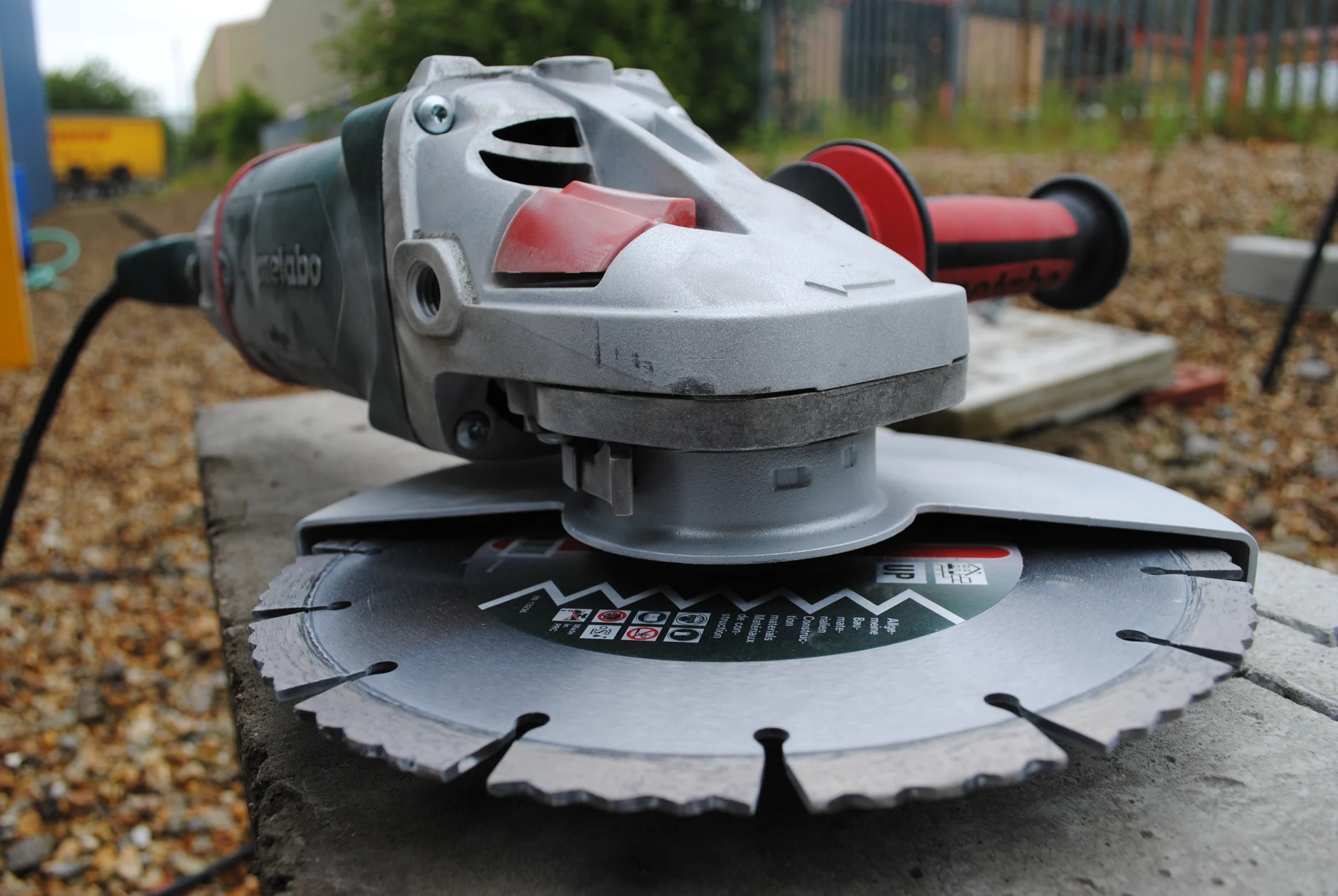

A practical way to forecast service life, track cost per cut, and know when a blade needs attention.
How long does a diamond blade last cutting concrete? That is a question commonly asked of salespeople and manufacturers alike. There is no reliable universal answer in time or linear feet, due to many factors including type and quantity of reinforcement, quantity of water, properly tuned and maintained saws, and the experience of the operator, just to name a few.
The blade specification, aggregate, whether proper cooling was used, the depth of the cut, and operator technique all change the wear rate of a diamond blade. The useful answer is to measure life on your own work and retire the blade when it reaches the manufacturer’s wear limit or shows unsafe damage—not when a salesperson or online average says it should be used up.
How long does a diamond blade last cutting concrete in the real world?
Two identical blades can deliver very different service lives on different slabs. The age of the aggregate and the content of the aggregate in a particular area also affect the performance and life. A blade that cuts great in Florida in soft limestone might absolutely stink in river rock in Mississippi.
Hard aggregate can make an unsuitable bond glaze because the matrix does not release worn diamonds quickly enough. Very abrasive material can consume the bond rapidly. Reinforcing steel, deep cuts, undercutting, insufficient water, a misaligned saw, worn bearings, and side pressure can all change the result as well.
That is why a promise such as a fixed number of cuts, performance time or linear feet is a very poor purchasing guideline. A better forecast starts with a comparable job: the same blade specification, saw, material, depth, reinforcement, cooling method, and operator. If those inputs change, treat the old result as a reference point rather than a guarantee.
The factors that control diamond blade life
Scroll sideways to see all columns.
| Factor | How it changes wear | What to verify |
|---|---|---|
| Blade specification and bond | The segment must wear at a rate that continually exposes usable diamond without wearing down too quickly. | Type and hardness of material on the blade label and manufacturer literature. |
| Concrete and aggregate | Hardness and abrasiveness affect how the bond opens and how quickly the segment wears. | Cured or green concrete, aggregate type if known, and any abrasive layer. |
| Reinforcement | Steel interrupts the cut and adds heat and load; concentration and position matter. | Rebar, mesh, embedded steel, and actual cut path. Verify quantity and size. |
| Saw condition | Misalignment, worn bearings, damaged flanges, or incorrect shaft speed can cause uneven or accelerated wear. | Mainten and inspect before each use. Read and know the requirements in the saw manual. |
| Cooling and slurry removal | A wet-use blade needs the specified water delivery; poor flow can increase heat and wear. | Correct wet/dry use and flow to both sides where the equipment and blade requires it. |
| Feed and cut control | Forcing, twisting, or jamming adds side load and heat instead of productive cutting. | Steady feed, straight tracking, and the manufacturer’s operating technique. |
How to Build a Blade-life record contractors can trust
The most useful number is not blade age. It is the cost for a defined amount of acceptable work under recorded conditions. A simple log turns the next blade purchase from a guess into a comparison.
- Record the blade manufacturer and model, product or specification, diameter, and the saw used. Photograph the label before installation.
- Describe the material, approximate cut depth, wet or dry method, and known reinforcement. Keep different applications in separate records.
- Choose one production unit: linear feet at a stated depth, number of comparable cuts, square inches of cut, or completed openings and maintain consistency.
- Track interruptions, water problems, glazing, dressing, saw maintenance, and blade changes. These events explain outliers.
- At removal, record blade conditions including the remaining segment conditions and the reason for retirement. Compare cost per production unit, cut quality, and downtime—not purchase price alone.
When segment height is used as a wear measure, follow the blade manufacturer’s stated usable-segment or replacement limit. Segment geometry, weld area, undercut protection, and wear indicators vary by product, so a generic field measurement should not replace specific product instructions.
Slow cutting does not always mean the blade is worn out
A blade that has become slow may be glazed rather than consumed. Glazing is a condition in which the bond does not open to expose fresh diamond, commonly because the blade specification is too hard for the material. The correct response depends on the blade and manufacturer: confirm the application, equipment, and approved dressing procedure before continuing.
Do not try to dress away structural damage. Cracks, a missing or loose segment, a damaged arbor hole, severe out-of-round wear, core distortion, or evidence of overheating call for shutdown and inspection. Remove a damaged blade from service and follow the blade and saw manufacturers’ instructions.
How to improve diamond blade life without sacrificing safety
- Match the exact blade specification to the material and saw. Rim style or diameter alone is not enough.
- Use the blade only in its marked wet/dry mode and within the speed rating required by the saw manufacturer.
- For wet cutting, verify the delivery system before the cut and maintain the water distribution specified for the machine and blade. Remember that a wet blade MUST be run with water. A dry blade can be used with or without water.
- Let the blade work at a steady feed rate. Do not lean body weight into the blade, twist the blade, grind with its side, or force a slow blade through the cut in any way.
- Keep flanges, arbor, bearings, belts, guards, and alignment in serviceable condition. Uneven wear may be a machine symptom.
- Inspect before use and after any bind, impact, unusual vibration, loss of water, or sudden change in cutting behavior.
Frequently asked questions
Can you estimate blade life from segment height?
Segment height can show wear only when it is interpreted against the manufacturer’s design and replacement limit. It does not reveal every form of core, weld, arbor, or heat damage. The metals used and the diamond sizes, qualities and quantities all affect the performance and life of any tool.
Why did a new diamond blade become slow so quickly?
Possible causes include the wrong bond for the material, insufficient power, incorrect operating conditions, or glazing. Stop and check the blade label, saw condition, cooling, and manufacturer troubleshooting guidance before dressing or replacing it.
Should I buy the blade with the lowest price?
Compare cost per completed unit of work, cut quality, and downtime under similar conditions. A higher or lower purchase price alone does not predict total job cost. Use the manufacturer’s application guidance to check the choice.