
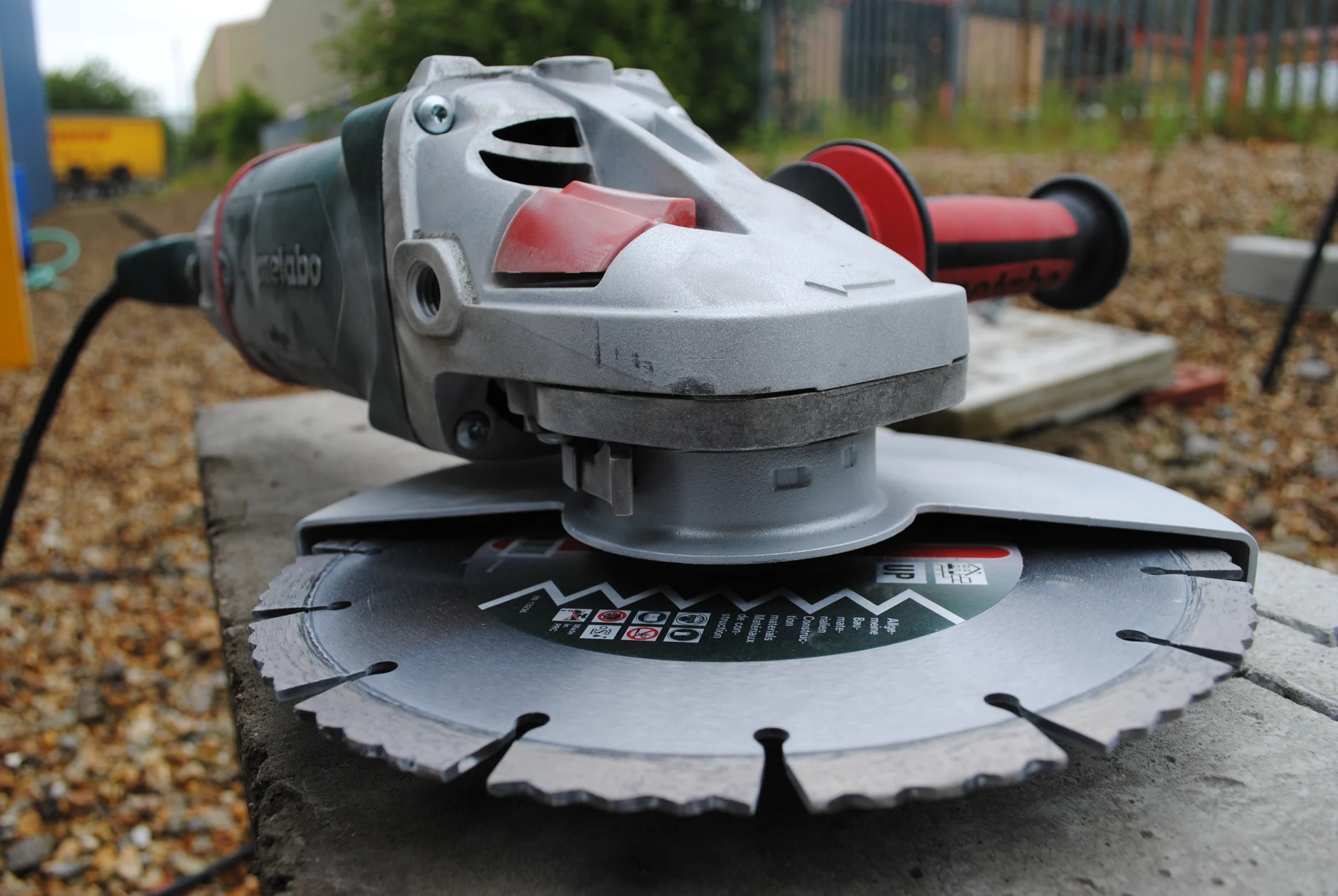

A contractor-focused guide to immediate response, diagnosis, prevention, and replacement selection
Diamond blade segment loss is a stop-work condition. If a segment is missing, cracked, loose, or separating from the steel core, shut the saw down, isolate its power source, and remove the blade from service. Do not finish the cut with the damaged blade. The next step is to determine why the segment detached so the replacement blade is not exposed to the same heat, side load, undercutting, or equipment problem.
What diamond blade segment loss means
A segmented diamond blade has diamond-bearing metal segments attached around a steel core. Segment loss occurs when one of those cutting sections separates from the core. The missing piece can become a projectile, and the remaining blade may also have heat damage, fatigue, loss of tension, or a weakened attachment zone that is not obvious during a quick glance.
Treat a missing segment differently from ordinary segment wear. Normal wear gradually reduces segment height across the rim. Segment loss creates a gap or a visibly failed joint. Field dressing can expose fresh diamond on a glazed segment, but it cannot restore a detached segment or prove that the rest of the blade is sound.
Common causes of diamond blade segment loss
Scroll sideways to see all columns.
| Evidence on the blade or saw | Likely cause to investigate | Corrective direction |
|---|---|---|
| Blue or dark heat discoloration near the rim | Insufficient cooling, blocked water delivery, continuous dry cutting, or excessive feed | Verify the blade's wet or dry rating and restore the maker-specified cooling method |
| Steel core worn thin directly below segments | Undercutting from abrasive material or cutting into an abrasive sub-base | Correct the application and consider a blade designed with undercut protection designed for that aggregate. |
| Damage concentrated after a bind or sudden stop | The work moved, the blade twisted, or the cut closed on the blade | Support the work, keep the cut straight, and investigate pinching before restarting |
| Polished segments, pounding, or repeated glazing | Bond is too hard for the material or the blade is running out of round | Select a blade with the proper specifications. Inspect the saw shaft, bearings, and mounting system |
| Uneven wear or inconsistent contact around the rim | Misalignment, worn saw bearings, damaged arbor, dirty collars, or incorrect mounting | Service the saw and mounting components before installing a replacement blade |
Overheating and inadequate cooling
Inadequate water is the main cause of segment loss on wet-cutting blades. Water must reach the cutting area on both sides of the blade as the manufacturer specifies. A full tank or an open valve does not prove that delivery is adequate; kinked hoses, blocked ports, low pressure, or poor distribution can still starve the rim of necessary water.
For an approved dry-cut blade, cooling comes from air rather than water. The operator must follow the blade and saw manuals for cut duration and cool-down intervals. A blade labeled for wet cutting should not and cannot be converted to dry use because water is inconvenient on the job.
Undercutting in abrasive material
Undercutting is accelerated wear of the steel core immediately below the segments. Abrasive slurry and cutting debris can attack that thinner steel until the segment attachment is no longer adequately supported. Asphalt, green concrete, masonry (primarily block), and sandy or abrasive conditions can increase this risk. The correct specification depends on the complete application. Adequate flushing and a blade designed for abrasive service can help. However, neither substitutes for inspecting the core during use.
Twisting, jamming, and side loading
Diamond blades are intended to cut in a straight plane. Turning the saw while the blade is engaged, allowing the work to move, or forcing a closing cut can twist the core and shock the segment joints. Secure the work and plan the cut so the blade is not asked to steer or pry in any way.
Wrong blade specification or equipment condition
A blade with a bond(the metals that hold the diamonds) that is too hard for the job material can glaze, bounce, and build frictional heat instead of cutting freely. Worn bearings, an out-of-round arbor, misalignment, incorrect collars, or operation outside the approved RPM range can add cyclic impact and vibration. Replacing only the blade will not solve a saw-side fault.
What to do after a segment comes off
- Stop the saw without approaching the rotating blade. Wait for all movement to end, isolate the power source, and follow the saw manufacturer's shutdown procedure.
- Control the area. Account for the detached segment only when it is safe to do so, and keep other workers away from the blade and the fragment path.
- Remove the damaged blade from service. Mark or segregate it so another operator cannot reinstall it by mistake. Do not braze, weld, grind, or otherwise field-repair the attachment area.
- Inspect for clues before discarding evidence. Photograph heat discoloration, undercutting, cracks, uneven wear, damaged arbor holes, collar marks, and the work setup. Record the material, cutting depth, wet or dry method, saw model, blade label, and operating speed setting.
- Inspect the saw before fitting a replacement. Check the arbor, shaft, bearings, collars, guard, alignment, water or dust-control system, and available speed against the manufacturer's instructions. Qualified service personnel should address suspected mechanical faults.
- Recheck the application. Confirm the material, aggregate and abrasiveness, reinforcement, blade diameter and arbor, wet or dry rating, maximum operating speed, saw power, and cutting depth with the tooling supplier for that particular aggregate.
- Test the corrected setup under controlled conditions. Stop again if the replacement blade shows abnormal heat, bouncing, side wear, unusual noise, or poor tracking.
How to prevent segment loss on the next blade
- Inspect the blade before each use for missing, cracked, loose, or damaged segments; cracks in the steel core; arbor damage; and heat discoloration.
- Match the blade specification to the material and aggregate instead of relying only on diameter or a broad 'concrete' label. Check the exact blade manufacturer's application guidance before choosing a replacement.
- Use the approved water delivery or dry-cut cooling practice and keep dust-control equipment operating as required. OSHA's silica guidance also directs employers using covered tools to follow manufacturer instructions related to water, dust collection, blade maintenance, and blade rotation.
- Use steady feed pressure and keep the blade straight. Do not force a glazed blade, steer in the cut, or use the blade for side grinding.
- Keep the saw maintained. A clean, flat mounting surface cannot compensate for worn bearings, a damaged shaft, or misalignment.
Frequently asked questions
Can a diamond blade with one missing segment still be used?
No. Remove it from service and follow the blade manufacturer's disposition or inspection process. Continuing to cut exposes the operator to a damaged rotating tool and potential injury does nothing to correct the cause of the failure.
Can a missing segment be welded back on?
Not as a jobsite repair. Segment attachment is a controlled manufacturing or qualified repair process. Do not expect safe repairability without the specific manufacturer's approval and guidance.
Does segment loss always mean the blade was defective?
No. A manufacturing issue is possible, but troubleshooting guides also identify inadequate cooling, undercutting, twisting or jamming, the wrong bond specification, out-of-round operation, and mounting or equipment problems. Preserve the blade, details of the failure, and all operating details for the supplier's review.