
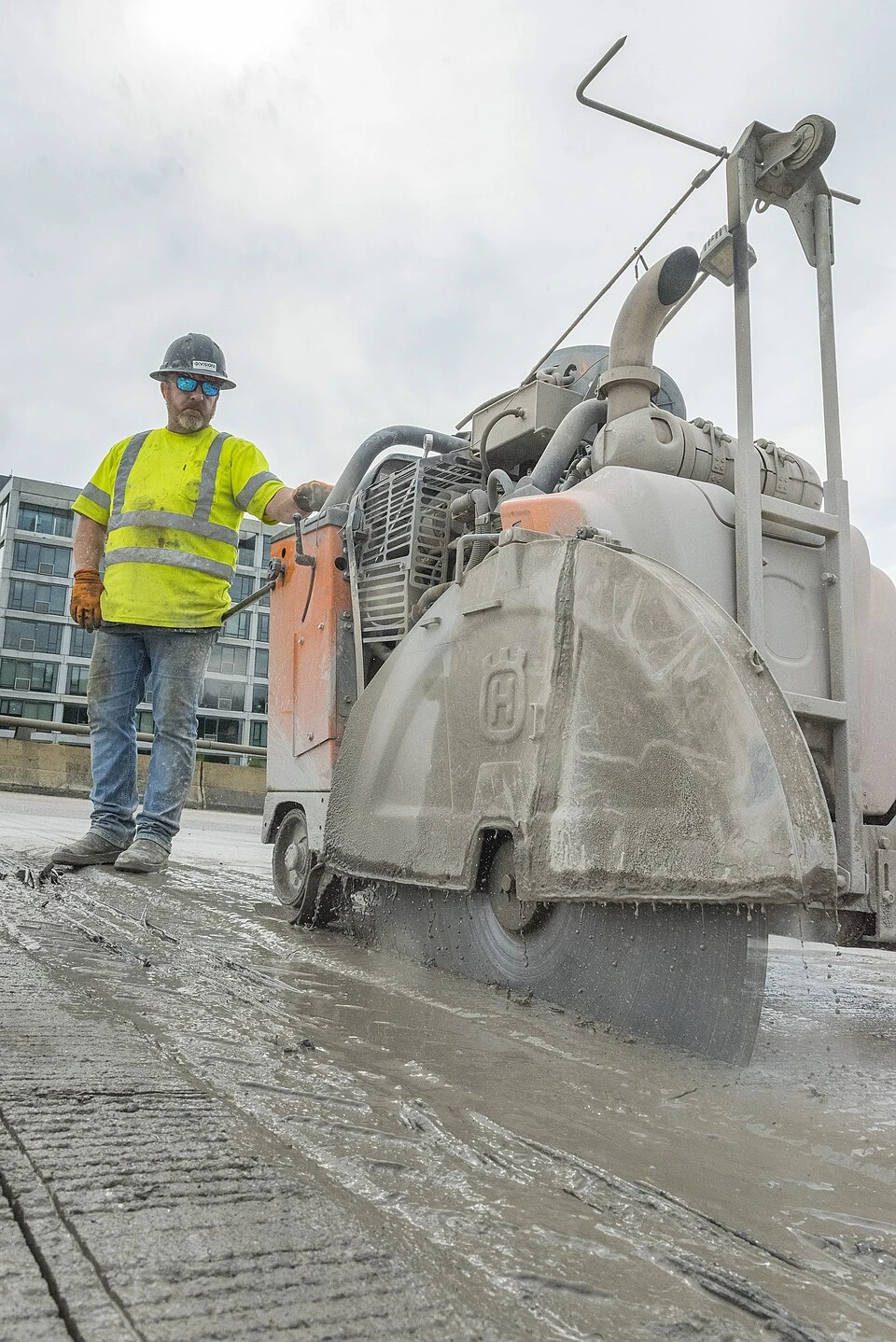

Use the manufacturer flow specification and verify delivery where the blade meets the cut.
How much water does a concrete saw need? There is no single safe flow rate for every saw, blade and job type. Use the flow specified by the equipment manufacturer and maintain enough continuous delivery at the blade to control visible dust and support the cooling method. STIHL brand saws gives a minimum of 20 fluid ounces, or 0.6 liter, per minute for its applicable abrasive cutting systems when cutting silica-containing material, but that number should not be generalized to other machines.
How much water does a concrete saw need?
OSHA's construction silica rule requires handheld power saws used on silica-containing material to have an integrated water delivery system that continuously feeds water to the blade and to be operated according to the manufacturer's instructions. OSHA does not assign one universal gallons-per-minute number in Table 1. Its compliance guide says water must be applied at the rate specified by the saw and blade manufacturer.
That distinction matters because a handheld cut-off saw, masonry saw, floor saw, wall saw, and ring saw may use different delivery systems. The required flow can also depend on nozzle design, blade size, pressure, cut orientation, hose condition, and whether the water is serving dust suppression, blade cooling, or both.
Use three checks instead of one generic number
Scroll sideways to see all columns.
| Check | What good delivery looks like | What requires correction |
|---|---|---|
| Manufacturer flow | The supply meets the exact saw and blade instructions. | A guessed setting or a number copied from another machine. |
| Delivery at the blade | Water reaches the intended points on both sides or at the nozzles described by the manual. | A kinked hose, blocked nozzle, one-sided stream, or water missing the cut. |
| Dust control | Visible dust is minimized while the approved wet method is operating. | A persistent dust plume or dry debris leaving the kerf. |
| Cut behavior | The blade tracks normally without signs of overheating or unequal side wear. | Heat, odor, discoloration, wandering, or uneven wear. |
| Slurry control | Slurry is collected and removed before it dries or spreads into hazards. | Runoff reaching traffic, drains, electrical equipment, or drying into dust. |
Why pressure and nozzle condition matter
A source can deliver an adequate volume at the tap while the blade receives too little water. Long hoses, elevation changes, small fittings, clogged filters, mineral buildup, damaged seals, and partly closed valves can reduce actual delivery. Inspect the system at the machine, not only at the water source.
Uneven delivery can also damage the cut. Manufacturers identify insufficient water on one side of a blade as a cause of uneven side wear and recommend distributing water evenly on both sides. If the machine uses two nozzles, confirm that both are open, aimed correctly, and flowing before cutting.
A precut water delivery check
- Read the current saw and blade instructions and identify the required wet-cutting method, flow or pressure specification, and approved water connection.
- Inspect the hose, couplings, valves, filter, nozzles, seals, and guard. Correct leaks, kinks, blockage, or missing parts before operation.
- Start the water system using the machine's procedure and verify continuous delivery at the blade and cutting area. Do not rely on sound from the pump alone.
- Confirm that the planned supply can maintain delivery through the full cut. Account for a shared water line, tank capacity, battery runtime, and pressure loss.
- Prepare slurry collection and keep electrical connections protected as required. Wet cutting creates a second hazard if runoff is uncontrolled.
- Stop if visible dust persists, delivery becomes one-sided, the blade overheats, or the water system changes. Diagnose the cause before restarting.
Water does not make every blade or saw wet capable
Adding a hose does not convert a dry-only electrical tool into a wet saw. Both the machine and blade must be approved for the wet method, and the electrical setup must follow the manual and applicable requirements. OSHA guidance for wet cutting also addresses ground-fault circuit interrupter protection and watertight, sealable electrical connectors where electrical tools are used.
The reverse is also true: a wet-only blade should not be run dry because the operator wants less cleanup. Product markings and the manufacturer's instructions control the method. If the blade or saw rating is unclear, stop and identify it before use.
When visible dust remains
More water is not automatically the first or only correction. Check whether water reaches the point of cut, whether nozzles are blocked or misaligned, whether the blade guard and delivery parts are installed correctly, and whether the feed rate exceeds the system's ability to wet the kerf. Follow the exposure control plan and the manufacturer's troubleshooting steps.
Respiratory protection requirements depend on the task, duration, environment, and silica-control method. Water delivery is an engineering control, not permission to ignore the rest of the employer's silica program.
Frequently asked questions
Is the STIHL brand minimum enough for every concrete saw
No. The 0.6 liter per minute figure is a STIHL minimum for applicable systems and silica-containing material. Use the exact manufacturer specification for the saw and blade in use.
Can I judge water flow only by the amount of slurry
No. Confirm delivery at the blade and watch for visible dust, one-sided flow, overheating, and uneven wear. Slurry volume alone does not prove correct nozzle performance.
Should water run before the blade starts
Follow the exact machine instructions. The sequence can differ by equipment and wheel type, so do not substitute a generic start or shutdown routine.