
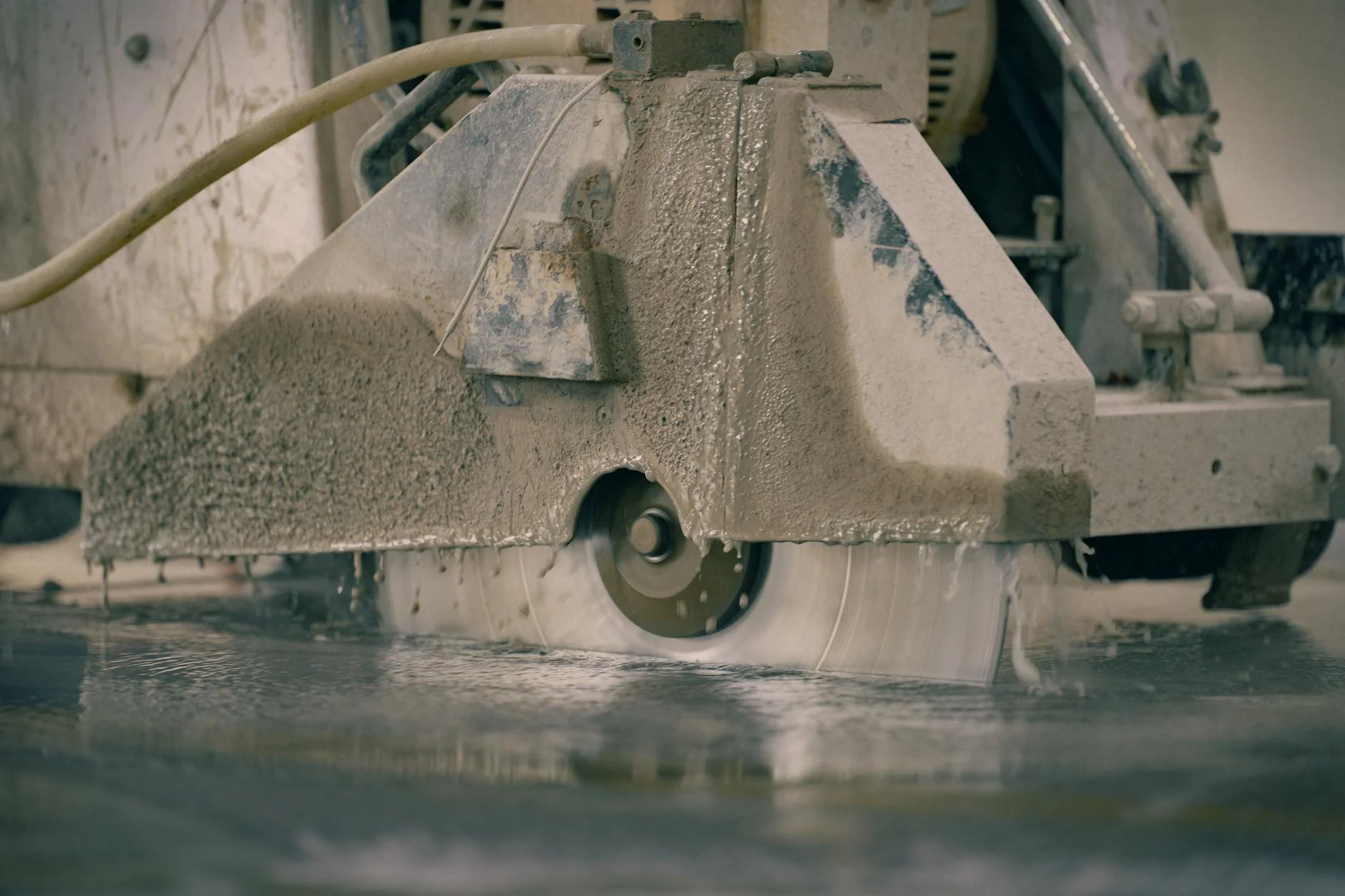
Diagnose the blade mounting, water delivery, alignment, and kerf before replacing parts.
Why is my concrete saw pulling to one side? Common causes include uneven water delivery, blade side wear, dirty or damaged flanges, a worn arbor or bearing, saw-head misalignment, wheel or tracking problems, excessive feed pressure, or a closing kerf. Stop the cut and inspect the system before trying to steer harder against the pull.
Why is my concrete saw pulling to one side?
A concrete saw should follow the intended line without continuous sideways correction. Pulling means the blade or machine is no longer moving through the kerf symmetrically. Continuing can widen the cut, side-load the blade, increase heat, and hide a mounting or equipment problem.
A troubleshooting guide links uneven side wear to insufficient water on one side, worn bearings or arbor components, and saw-head misalignment. It can also identify worn shaft bearings, damaged arbors, and engine surging as causes of a blade wearing out of round. The symptom can have several sources, so diagnose it in a fixed order.
Start with the cut and the blade
Scroll sideways to see all columns.
| Observation | Possible cause | First verification |
|---|---|---|
| Blade pulls only in one material | Blade bond or application rating may not match the material, aggregate, or reinforcement. | Blade product data and the actual material being cut. |
| One blade side looks more worn | Water may be reaching one side unevenly, or the blade may be side-loaded. | Both nozzles, guard delivery points, segment wear, and operator feed. |
| Pull began after blade change | The blade may be mounted against dirty, burred, damaged, or incorrect flanges. | Blade seating, bore, bushing, flanges, rotation direction, and fastener procedure. |
| Several blades pull the same way | The saw head, spindle, bearings, wheels, or tracking system may be misaligned or worn. | Machine inspection and manufacturer alignment procedure. |
| Pull increases deep in the cut | The kerf may be closing, debris may not clear, or feed pressure may be deflecting the blade. | Work support, cut sequence, water, pass depth, and feed technique. |
A diagnostic sequence for a saw that wanders
- Stop, isolate the saw, and secure the work area. Do not inspect a rotating blade or reach inside the guard while the machine can start.
- Examine the cut. Look for a closing kerf, shifted work, reinforcement contact, debris packing, or a guide line that changes direction.
- Inspect the blade for uneven side wear, glazing, missing or damaged segments, cracks, distortion, a damaged bore, or out-of-round wear.
- Confirm correct blade direction, diameter, arbor, speed rating, material rating, pass method, and wet or dry designation.
- Remove the blade using the manual procedure and inspect the flange faces, spindle, bushing, and fastener. Clean contact surfaces and replace damaged parts.
- Check water or dust-control delivery. For wet cutting, verify that the intended flow reaches both sides and the point of cut evenly.
- If the symptom remains or appears with more than one known-good blade, have the saw's bearings, shaft, head alignment, wheels, and tracking checked under the manufacturer's service procedure.
Why forcing the saw back to the line is risky
Diamond blades are intended to work in their designed plane. Twisting the handles or pressing sideways to correct a wandering cut can flex the steel core and load the segment sides. Norton advises against side pressure, blade deflection, and cutting curves with a straight-cut blade. If alignment requires constant force, stop rather than fighting the machine.
A new blade is not always the repair. If dirty flanges, a worn bearing, one-sided water, or saw misalignment caused the problem, another blade can develop the same wear. Correct the machine or setup first, then decide whether the blade remains serviceable under the manufacturer's criteria.
Handheld and walk behind checks are different
A handheld saw is strongly affected by stance, grip, feed angle, and the way the operator enters the kerf. A walk-behind saw adds wheels, pointer alignment, drive tracking, chassis condition, and saw-head squareness. Use the checklist for the exact machine type rather than applying a handheld technique correction to a floor-saw alignment problem.
For a walk-behind saw, compare wheel condition and pressure where applicable, verify that the pointer represents the blade line, and use the manufacturer's vertical and horizontal alignment procedure. For a handheld saw, recheck work support, entry angle, pass depth, and whether the operator is unintentionally side-loading the blade.
When the material is closing on the blade
A cut can pinch as a slab, wall section, paver, or pipe moves or releases stress. That condition may feel like the saw is pulling even when mounting is correct. Stop and reassess support, cut sequence, exclusion zones, and the expected movement of the material. Do not use the running blade as a lever to open the kerf.
Structural work, suspended pieces, pipe under load, and post-tensioned or utility-filled concrete require an approved plan before cutting. Tool troubleshooting cannot resolve an unsafe load path or unauthorized cut location.
Frequently asked questions
Will a new blade stop a concrete saw from pulling
Only if the existing blade is the cause. If the saw, flanges, water delivery, alignment, or cut setup is responsible, a new blade can develop the same problem.
Can uneven water make a diamond blade wander
Yes. Manufacturer troubleshooting guidance links one-sided water delivery to uneven side wear, which can affect tracking.
Should I push harder against the direction of pull
No. Stop and diagnose the blade, mounting, water delivery, saw alignment, and kerf condition instead of adding side pressure.