
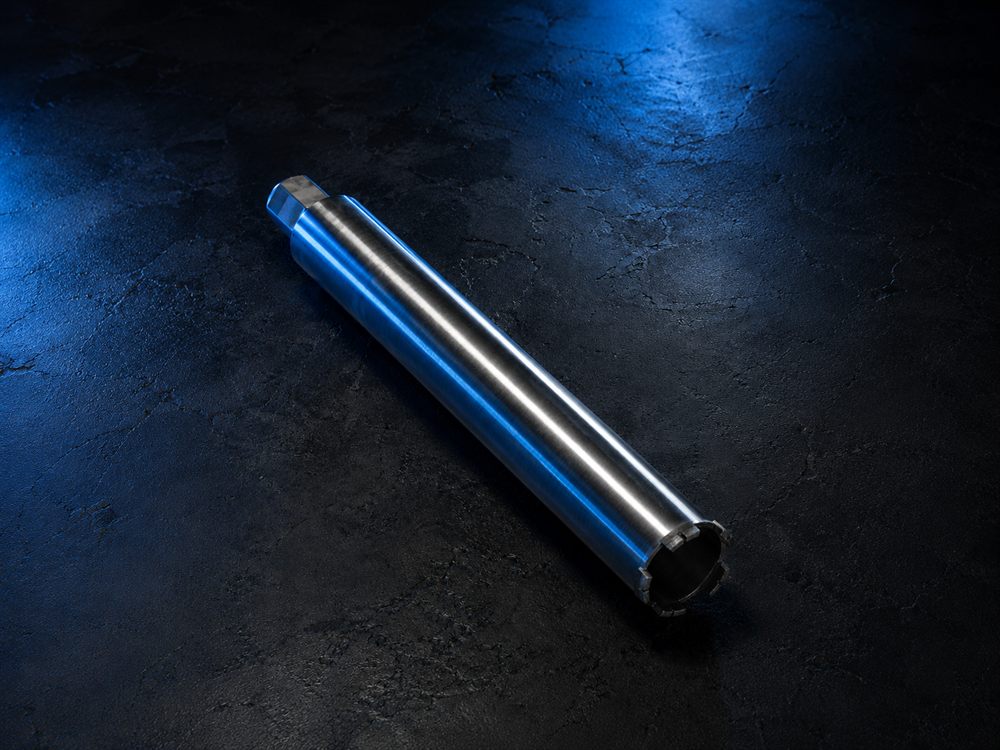
Separate the cutting capability from the structural decision before a bit reaches embedded steel.
Can you core drill through rebar? A diamond core bit rated for reinforced concrete can cut ordinary reinforcing rebar, but that does not mean the bar is safe to sever. The location must be approved, concealed objects must be identified, and the operator must distinguish conventional rebar from post tension cables and tendons, utilities, and other embedded hazards before drilling.
Can you core drill through rebar safely
The tooling question and the structural question are separate. Some manufacturers explicitly design reinforced concrete core bits and drilling systems to pass through ordinary reinforcement inside of the aggregate. The structure may still rely on that steel. Cutting it without authorization can reduce capacity, violate the project plan, damage a protected system, or create a hazardous condition so it is very important to verify before coring.
A post tension tendon is not the same as ordinary rebar. It carries high stored force as part of the structural system. The safe approach is to locate and avoid tendons unless a qualified design and work plan expressly directs otherwise. An unknown metal response in a slab should never be treated as permission to keep drilling.
Rebar and post tension tendons are different decisions
Scroll sideways to see all columns.
| Embedded item | Tooling question | Authorization question |
|---|---|---|
| Conventional rebar | Use a bit and machine specifically approved for reinforced concrete and the expected steel content. | Confirm that the planned opening and any intersected bars are accepted by the project authority or structural design. |
| Post tension tendon | Do not rely on a reinforced concrete rating as permission to cut it. | Locate and avoid it unless a qualified engineered procedure specifically addresses the tendon. |
| Electrical or communications conduit | A core bit may penetrate the enclosure before the operator recognizes it. | Locate, isolate, and control the service under the site's permit and lockout procedures. |
| Plumbing or other concealed service | Contact can damage the bit, service, structure, and surrounding area. | Verify drawings, scanning results, ownership, and shutdown requirements before work. |
Scan and approve the hole before selecting the bit
Start with the planned hole, not the tool. Review current drawings and field conditions, identify the structural system, and use an appropriate locating method performed by a competent person. Manufacturers typically describe concrete scanning applications required that locate rebar, tendons, conduits, voids, and other concealed objects to reduce the chance of striking them during coring and sawing.
Scanning is evidence, not a stand alone approval. Results need to be interpreted in the context of slab thickness, congestion, access, scanner limitations, and project requirements. Mark the opening and the detected objects, preserve required clearances, and obtain the necessary structural or facility authorization before the rig is anchored or the bit touches the surface.
Set up for reinforced concrete only after approval
- Confirm the core bit is labeled for reinforced concrete, the required diameter, the drilling method, and the exact motor connection.
- Match the bit diameter to an approved drill motor gear and stand configuration. Some motor manuals call for a lower gear or changed feed when drilling through reinforcement.
- Secure the stand using the approved anchor or vacuum method for the surface and orientation. Check carriage rigidity and bit runout before starting.
- Establish the water delivery and electrical controls required by the equipment and site. Protect the area below or behind the hole from water, slurry, and a falling core.
- Enter the surface gently, keep the bit aligned, and maintain the manufacturer's recommended feed. Do not lever, twist, or side load the barrel or put your weight into the coring. Let the bit do the work.
- If the load changes at steel, follow the exact motor and bit instructions. Stop for unexpected metal, severe binding, movement, loss of water, or an overload condition.
What changes when the bit reaches rebar
Steel usually increases the drilling load and can slow progress. Some manufacturers note that specific bits are intended to cut common reinforcing steel but not solid steel plate, and can provide product specific operating guidance for the brief load change at a reinforcing rod. Other manufacturers give model specific gear and feed guidance for iron reinforcement.
Those instructions cannot be generalized to every core bit or drill. Do not copy another brand's pressure, current, gear, or water guidance as every job and set-up is unique. If the bit is not clearly rated for reinforced concrete, stop and select an appropriate product rather than testing it in the hole.
Control silica, slurry, electricity and the falling core
- Use the integrated water delivery system and maintain it according to the manufacturer. OSHA identifies wet methods as the Table 1 control for rig mounted core saws and drills.
- Clean slurry before it dries and becomes an airborne dust source. Follow site requirements for collection and disposal.
- Use the required GFCI or PRCD protection and water resistant electrical connections. Keep cords and connectors out of slurry.
- Barricade the exit side and plan to retain or catch the core. A concrete core can release suddenly when the cut breaks through.
- Inspect the bit after a bind, impact, loss of water, unusual vibration, or contact with unexpected embedded material.
Frequently asked questions
Will rebar ruin a diamond core bit
A bit specifically rated for reinforced concrete is designed to encounter ordinary reinforcing steel, but steel raises load and wear. Bit life and procedure depend on the exact product, steel concentration, material, motor, feed, and cooling.
Can I core through a post tension slab
Only under a qualified plan that identifies the tendons and authorizes the opening. A reinforced concrete bit rating does not make it acceptable to contact or sever a post tension tendon.
Do I need to scan if drawings show the rebar
Drawings are useful but may not establish the precise field location of every bar, tendon, conduit, or later alteration. Follow the project's locating and authorization requirements before starting to core.