
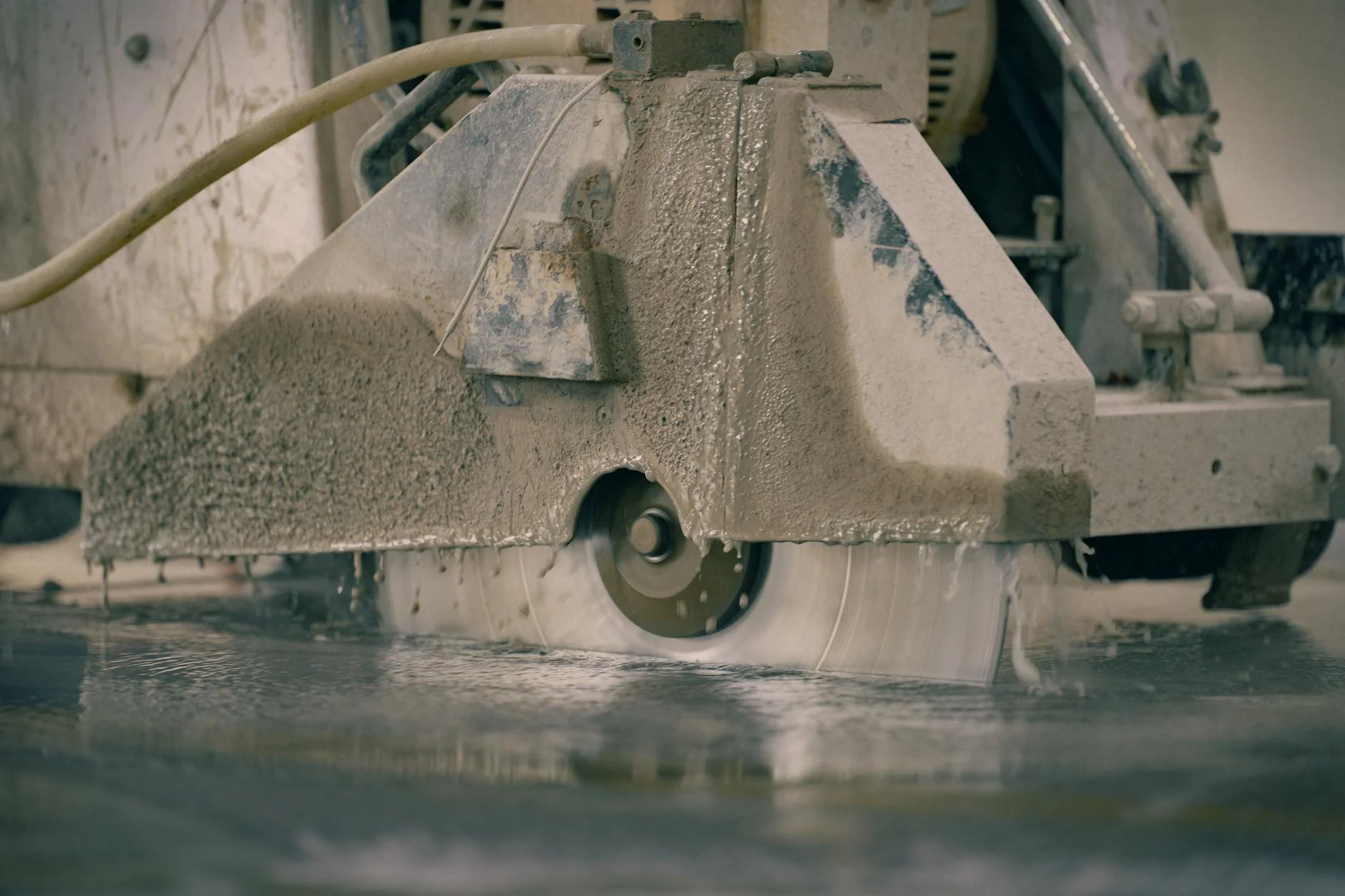
Use the saw specification to separate blade diameter from actual cutting capacity.
How deep can a 14 inch diamond blade cut? On common handheld cut off saws, the published maximum is often about 4.9 to 5 inches, but the saw determines the actual capacity. A 14 inch blade does not provide a seven inch cut simply because seven inches is its radius. The arbor, flanges, drive arm, guard, and required clearance keep part of the blade above the material.
How deep can a 14 inch diamond blade cut
Start with the exact saw specification rather than a diameter rule of thumb. STIHL currently lists a maximum cut of 4.9 inches for the TS 420 using a 14 inch diamond blade. A Husqvarna K 970 operator manual lists a five inch maximum for its 14 inch configuration. A separate K 970 configuration accepts a 16 inch blade; use only the blade diameter approved for the exact saw and guard.
Those numbers are examples for specific machines, not a promise for every saw that accepts a 14 inch blade.
Blade diameter describes the outside size of the wheel. Maximum cutting depth describes how far the saw can place the blade below the work surface while retaining the guard, mounting system, and machine geometry intended by the manufacturer. Two saws can use the same nominal blade diameter and still publish slightly different depths.
The saw sets the cutting depth
Scroll sideways to see all columns.
| Factor | How it affects depth | What to check |
|---|---|---|
| Saw geometry | The drive arm, guard, and housing limit how much blade projects below the machine. | The maximum cutting depth in the exact saw manual or current product data. |
| Blade diameter | A larger approved diameter can increase reach, but only on a saw designed and guarded for it. | The permitted blade diameter rather than the largest blade that can be mounted. |
| Flanges and arbor | The mounting system occupies part of the blade radius and must remain fully supported. | Correct arbor, bushings if expressly approved, flange size, and mounting instructions. |
| Blade wear | A worn segment reduces the effective outside diameter and therefore the available cutting depth. | Remaining segment condition and the manufacturer's retirement criteria. |
| Cutting method | A machine may limit pass depth even when its final depth capacity is greater. | Wet or dry rating, allowed pass depth, and any step cutting instructions. |
Maximum depth and pass depth are different
Maximum depth is the deepest the machine can reach. Pass depth is how much material the operator removes before advancing deeper. Confusing the two can overload the blade and saw. It is advised that saw users do not cut more than 1.5 inches deep per pass with dry cut blades and to allow a dry blade to cool in air during long work. Other machines and wet cutting procedures have different limits.
A series of approved shallow passes can reach the saw's full cutting depth with better control, but it does not make the saw reach beyond its published maximum. The blade still stops at the same physical limit once the guard and machine geometry reach the surface.
How to plan a cut before choosing the blade
- Measure the required finished depth and confirm whether the cut must pass completely through the material.
- Identify the exact saw model and read its maximum blade diameter, cutting depth, arbor, guard, and speed requirements.
- Select a blade rated for the material, the saw type, the saw's operating speed, and the intended wet or dry method.
- Check whether the manual requires step cutting, limits dry pass depth, or gives a specific water delivery procedure.
- Inspect the blade, flanges, arbor, guard, and saw condition before mounting. Do not use a cracked, distorted, or damaged blade.
- Mark the cut from a verified reference and account for access, slurry or dust control, the exit side, and any concealed hazards before starting.
Options when five inches is not enough
Do not remove the guard, install an oversized blade, or alter the arbor to gain depth. The safer planning choices are to use a saw system with a published capacity for the required depth, redesign the cut sequence under an approved procedure, or make accurately registered cuts from opposite faces when the structure and access allow it.
A two sided cut requires more than marking both surfaces by eye. The crew must establish a shared reference, keep the kerfs aligned, manage the remaining section, and control the release of material. For structural concrete, embedded utilities, or post tensioned construction, location and authorization come before tool selection.
A buyer checklist for a 14 inch blade
- Exact saw make and model plus the approved 14 inch configuration
- Required finished depth and whether the job is a score cut or full penetration
- Material including reinforcement aggregate and abrasiveness
- Arbor size flange requirements maximum blade speed and rotation direction
- Wet only dry capable or wet dry rating for both blade and saw
- Expected pass method and any manufacturer limit on depth per pass
Frequently asked questions
Why can a 14 inch blade not cut seven inches deep
Seven inches is the blade radius, but the arbor, flanges, guard, and saw body use part of that radius. Only the portion designed to project beyond the machine can enter the material.
Can repeated passes make a 14 inch blade cut deeper
Repeated passes can safely approach the saw's published maximum when the manual permits them. However, they do not increase the machine's physical depth capacity.
Does every 14 inch concrete saw cut five inches
No. Current examples cluster near five inches, but the exact value belongs to the saw model and configuration. Verify the manual before buying and using.